How Michigan’s universities, accelerators, mentors, and investors helped me, an international student, build the confidence—and the company—to finally call myself a founder.
For a period of time, I washed dishes at the University of Michigan North Quad dining hall. It was not because I planned to work in food service, but I needed a Social Security number so I could complete the tax paperwork required to start my company.
At the time, I was preparing to build a technology startup. During the day, I thought about the product, designed systems, and looked for partnership. At night, I stood in front of a sink, washing one plate after another.
Sometimes, the situation felt absurd. I was trying to build a technology company in the United States, but first, I had to wash dishes (work for other company) to obtain the identification number needed to incorporate it.
For an international student, entrepreneurship often looks like this. You are not only building a product, finding a market, and persuading investors. You are also dealing with visas, work authorization, corporate governance, payroll records, E-Verify, and questions like, “Can my own company legally employ me?”
It is a marathon that most people never see.
I Never Imagined I Would Become a Founder
I grew up in a middle-class family in Taiwan and studied architecture as an undergraduate. Before coming to the United States for graduate school, I worked four jobs to gradually save enough for tuition and living expenses. A scholarship opened the door, but walking through it still required almost all of my savings.
When I arrived in Ann Arbor, my plan was similar to that of many international students: study hard, build useful skills, and find a stable job. “Startup founder” was never a title I dared to claim.
I did not believe I had enough business knowledge. I had no meaningful network and very few resources. English was not my first language. There was a time when I had to write out every word of a one-minute introduction and rehearse it repeatedly before I felt comfortable presenting my idea.
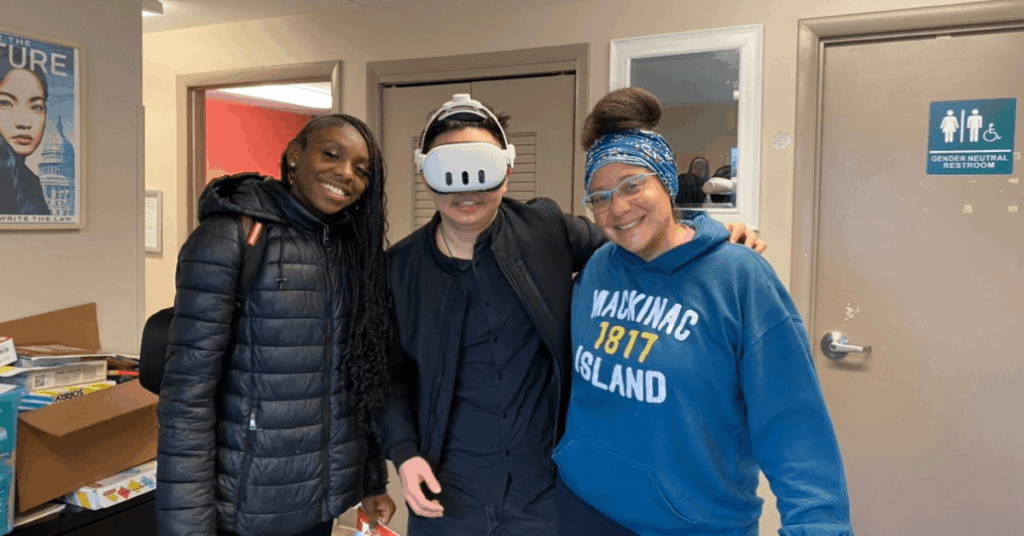
But during my time at the University of Michigan, I began working with extended reality, or XR. I participated in hackathons, competitions, and research projects. I brought the experiences we created into children’s hospitals, after-school programs, and classrooms. Over time, I realized that XR had value far beyond gaming and entertainment.
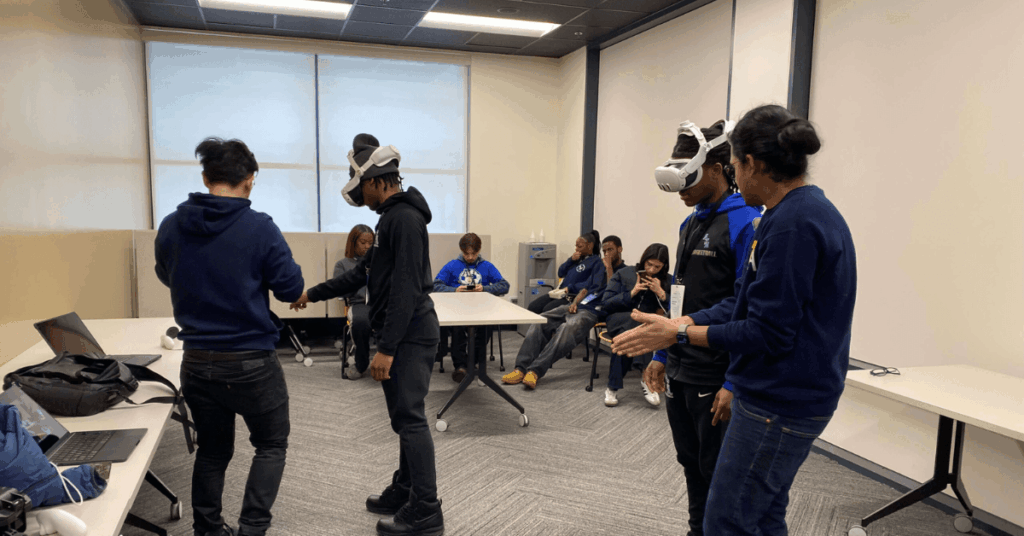
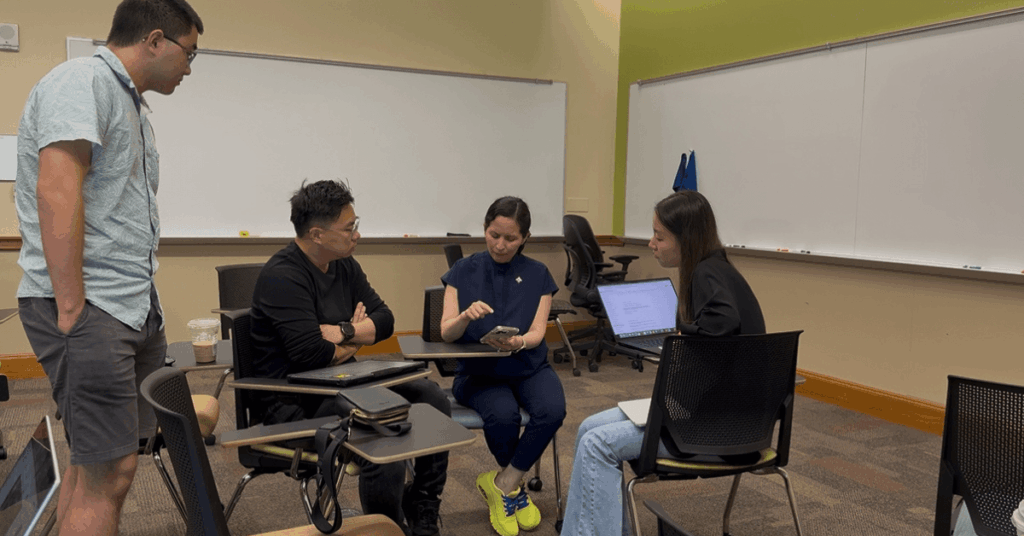
One experience at the Michigan Engineering Zone shifted the direction of my work: Our team brought an early XR coding prototype called CodeBloc to a group of twenty-seven students. We had two hours with them. Even though our team worked as hard as possible, we could not give every student a meaningful opportunity to exprience it.
Later, a teacher told me that their school already had several XR headsets sitting in the library. Every student surveyed said they wanted to try them, but not a single student had ever used one.
The problem was not a lack of student interest. The school even had access to the hardware. The real problem was that no one knew how to bring XR into an entire classroom.
The existing tools were too technical, too fragmented, and too dependent on specialized staff. One social studies teacher told me directly, “I can see this technology being used in education, but it needs to be seamless, and educators need central control.”
That statement became the starting point for OXR.
I wanted to build a spatial presentation platform that was as easy to use as Google Slides. Teachers would not need to become game developers to create, present, and manage immersive content. Students would not necessarily need to wear headsets, either. They could participate through a browser, tablet, interactive display, or XR device.
Learning the Language of Startups in Rooms Where I Did Not Feel I Belonged
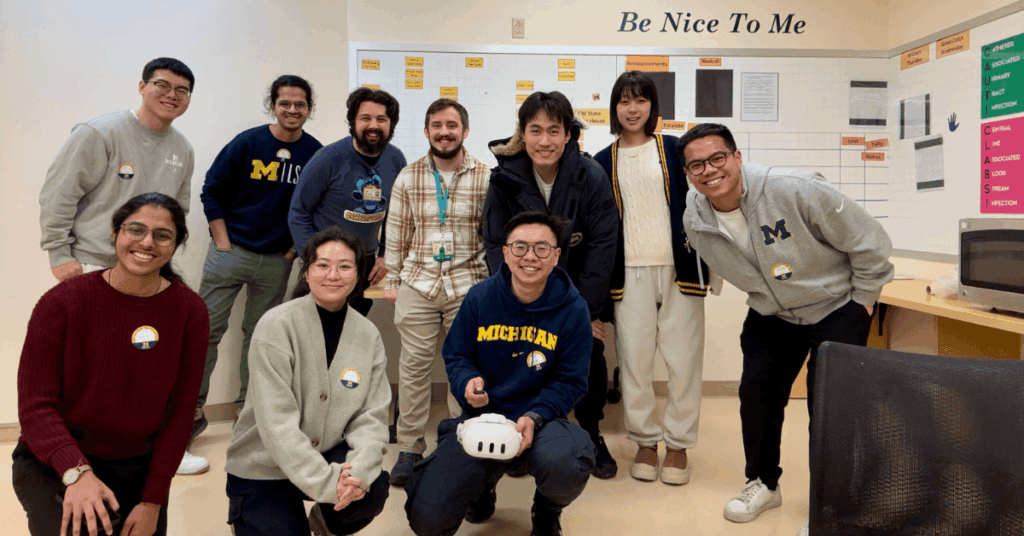
That idea brought me into Ann Arbor SPARK, Zell Entrepreneurs, and the broader University of Michigan entrepreneurship ecosystem.
At first, I felt deeply uncomfortable in those rooms. Some people had already built revenue-generating companies. Others were MBA students or had MBA co-founders. They spoke naturally about market size, financial models, valuations, sales funnels, and venture terms.
I was an international student with a background in architecture who still had to prepare an elevator pitch word by word. Whenever an event began with, “Let’s have everyone introduce their company in one minute,” my heart would immediately start racing. But those uncomfortable moments were exactly where I began learning the language of entrepreneurship.
I learned how to build financial projections, analyze markets, design business models, and understand that a valuable technology does not automatically become a viable business. Through financial modeling and customer discovery, I eventually realized that CodeBloc, our first product, would be difficult to grow into a sustainable standalone company.
Admitting that was painful. We had invested a tremendous amount of time and energy into building it. But I did not give up on the original idea. I continued observing classrooms, educators, and students. Those observations eventually led to OXR.
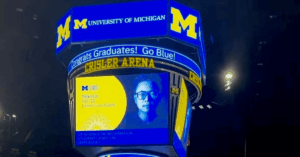
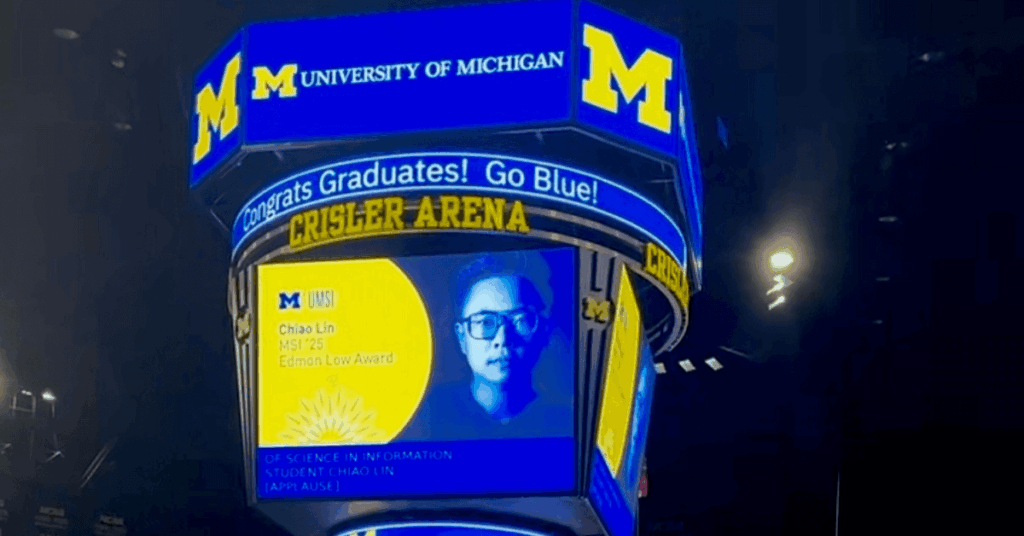
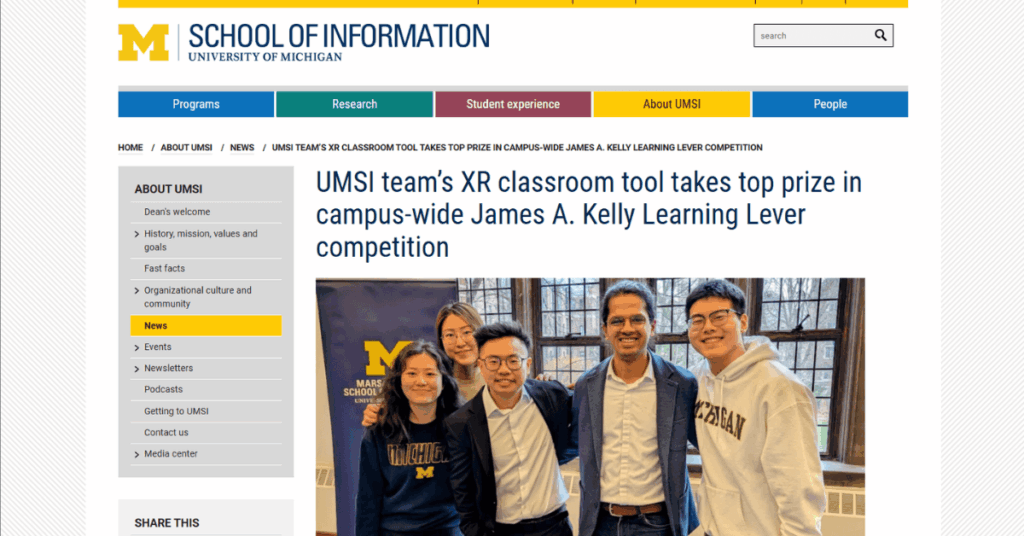
Had I stopped when the first idea did not work, I would never have reached the product we are building today. Before graduation, I won the University of Michigan Learning Levers Grand Prize, which included $10,000 in development funding. I was also named the Weiser Family Graduate Entrepreneur of the Year.
Those recognitions mattered. But they did not make the fear disappear. They simply helped me believe that perhaps I could take one more step forward.
By the End of 2025, I Had No Idea What the Next Step Was
The end of 2025 was one of the most uncertain periods of my entrepreneurial journey.
We had already completed pilots with K–12 schools, universities, and nonprofit organizations in the United States. The user data was encouraging, and feedback from teachers and students made us believe the product was creating real value.
But I was also beginning to understand the reality of selling into education. The resistance to purchasing was significant. Procurement cycles were long. There was a large gap between people saying, “This is a great product,” and an institution actually agreeing to pay for it.
Members of our engineering team received offers from companies that could pay much higher salaries. An investor who had proactively offered to invest was suddenly unable to move forward because of personal liquidity constraints.
As the founder, I was trying to find customers while also defining the product, producing the designs, and translating every idea into requirements clear enough for engineers to build.
I knew that some innovation centers, schools, and research institutions were open to XR. Beyond that, I did not know where the next customer would come from.
I also knew the company needed capital, but I was hesitant to raise money. I understood that fundraising required more than a polished pitch deck. I needed stronger evidence that the product could be sold repeatedly and that the company had the potential to grow.
I fell into a period of intense self-doubt — Imagine being thirty years old, spending nearly all your savings on a graduate degree in another country, and then choosing to build a startup with no stable job waiting in the background.
I was genuinely afraid. Eventually, I learned that courage does not mean the fear disappears. Courage means learning to live alongside the fear and still returning to the work the next morning.
Stepping Outside the Protection of the University
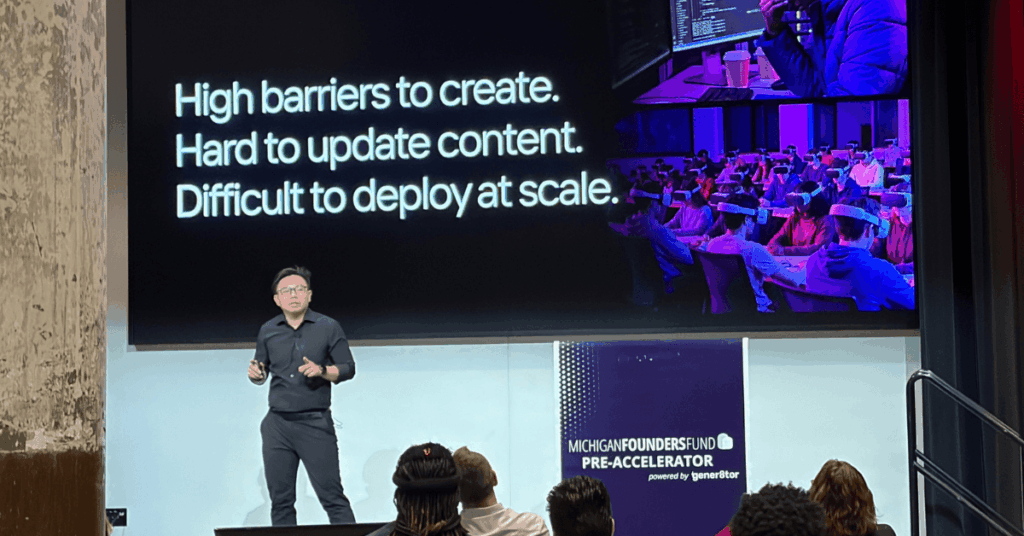
At the end of 2025, I applied to the Michigan Founders Fund Pre-Accelerator and submitted a proposal to teach a tutorial at IEEE VR 2026. When I submitted those applications, I had little confidence that either would work out. I was still searching for product-market fit, and I did not know whether I was truly qualified to teach at an international academic conference.
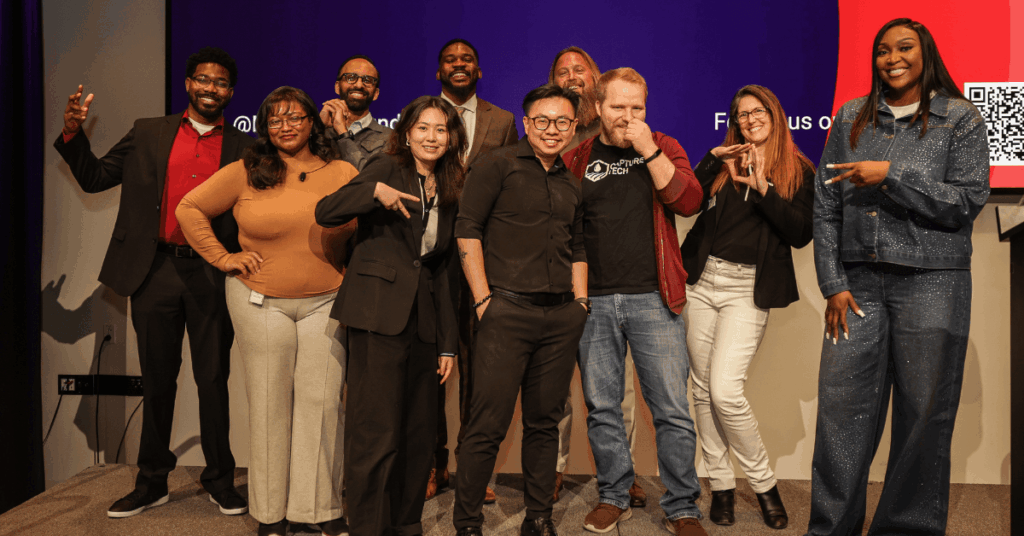
At the beginning of 2026, I learned that we had been accepted into the pre-accelerator and would receive $15,000 grant. The money gave the company more room to continue developing the product. But for me, the greater significance was that this was the first clear recognition I had received from the Michigan startup ecosystem outside the University of Michigan.
At startup events in Michigan, I was often one of very few Chinese/ Taiwanese or international founders in the room. At an event with two or three hundred people, there might be fewer than five East Asian faces. I had to walk into unfamiliar groups, introduce myself, explain the company, and learn how people in this ecosystem built trust.
It was not easy.
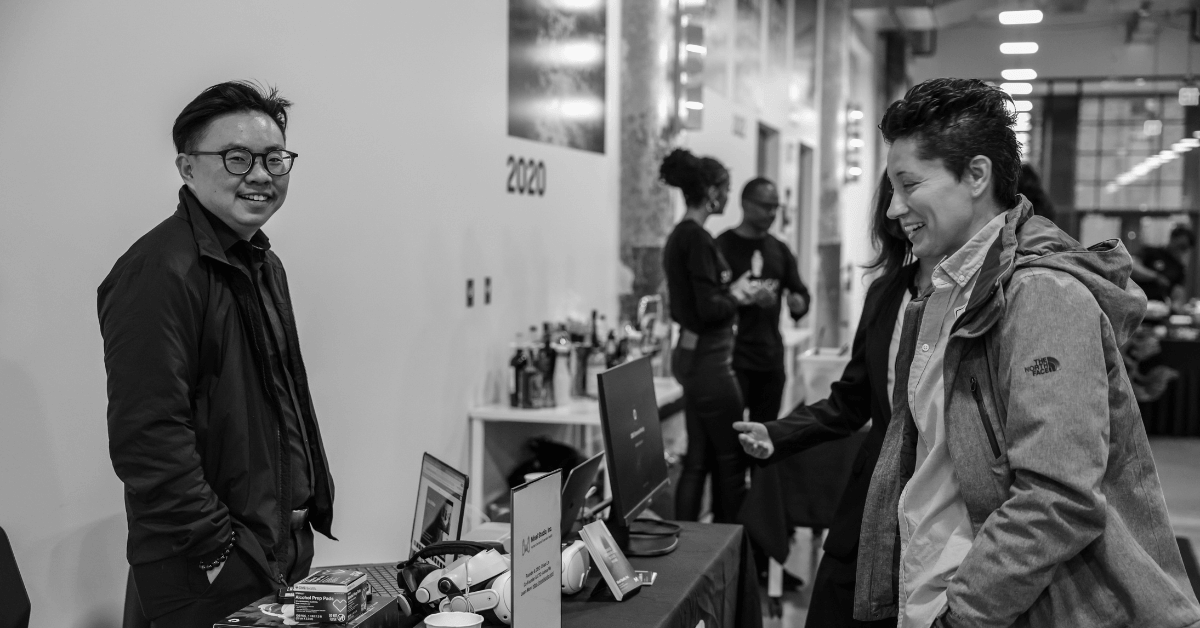
But the accelerator’s programs, mentors, and network gradually helped me become part of Michigan’s startup community. I continued practicing my pitch and communication skills. By the end of March, I had completed the Michigan Founders Fund Showcase at Newlab. For the first time, investors within the broader Michigan ecosystem began paying attention to us, and I started receiving invitations to enter formal due diligence.
I began to understand that a strong entrepreneurial ecosystem should not only select people who already look like obvious winners. Its deeper value is in giving people a chance to begin before they are completely prepared, and sometimes before they fully believe in themselves.
From Memorizing Every Word to Teaching at IEEE VR
The IEEE VR tutorial became another direct confrontation with impostor syndrome.
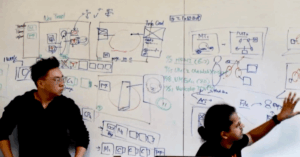
I knew what I wanted to discuss: how we had brought XR into American schools, observed teachers and students using it, and redesigned the product architecture based on the limitations we discovered. But transforming several ideas into a coherent, theoretically grounded ninety-minute tutorial was a completely different challenge.
I had only a master’s degree, yet I would be teaching doctoral students, researchers, and industry experts. At times, I wondered whether some people in the audience had read more academic papers in a single year than I had in my entire life.
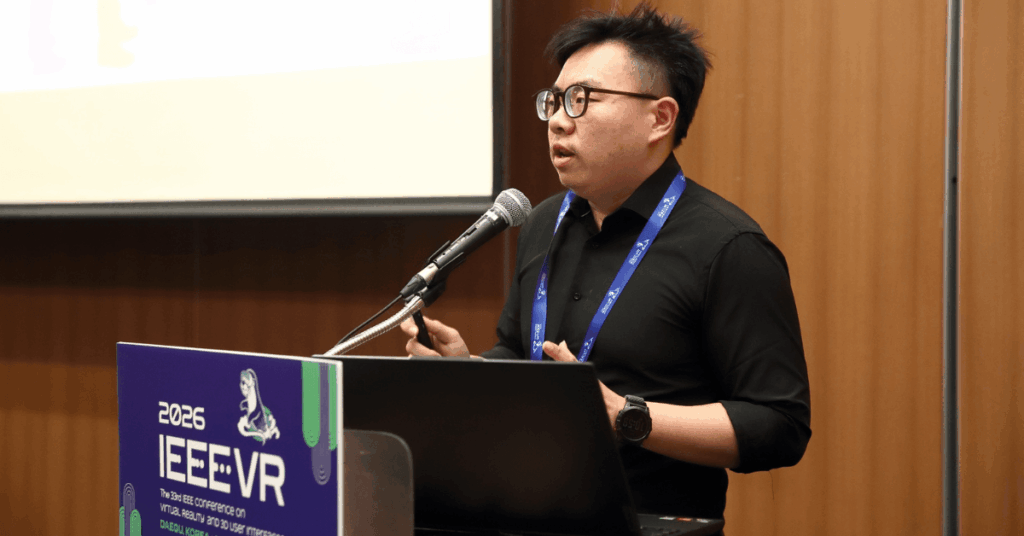
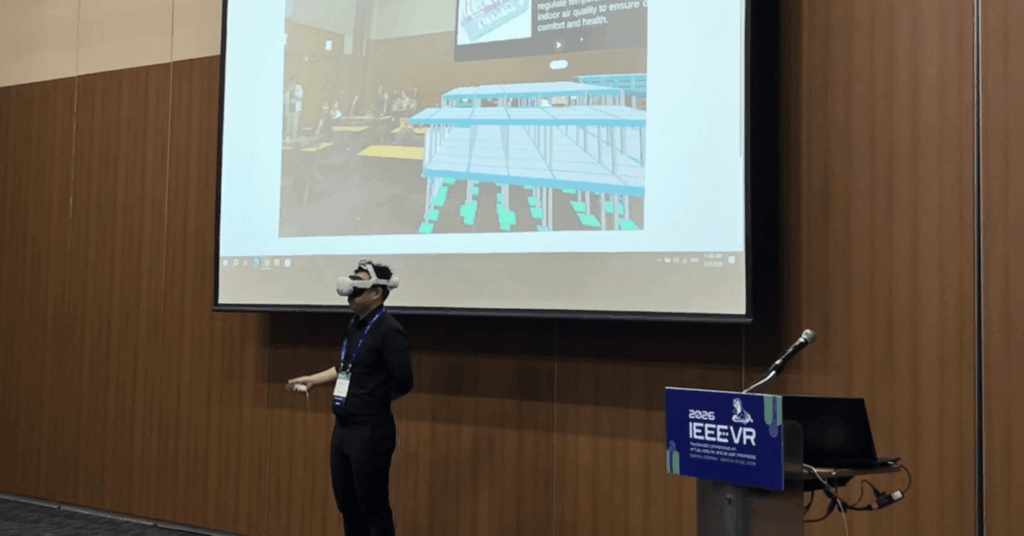
I spent six full weeks preparing — I returned to the academic literature and organized everything we had learned from user testing, classroom deployment, behavioral observations, product limitations, and design decisions. Eventually, those practical experiences became a complete tutorial, named “Designing Authorable Mixed Reality Systems: Scalability, Interaction Patterns, and Lessons from Real-World Deployments”
When I arrived in South Korea, I saw that nearly all the other tutorial instructors were professors from leading universities or research scientists from major technology companies. To say I did not feel impostor syndrome would be dishonest. Before walking onto the stage, I told myself, “You have prepared as thoroughly as you can. The problems you encountered in the field over the past year are exactly what people came here to hear about.”
That day, the room was full.
During several of the more important analytical sections, I saw people raise their phones to photograph the slides. At lunch, two doctoral students approached me and said, “Your tutorial was really interesting. You clearly know what you are talking about.”
That moment meant a great deal to me.
The international student who once had to memorize a one-minute pitch word by word was now standing on the stage at IEEE VR, teaching from experience.
Every Opportunity Came With a New Responsibility
During the same period, we began working with the University of Michigan Innovation Partnerships team to evaluate OXR’s technology and intellectual property.
Honestly, at the beginning, we did not understand what could or could not be patented. We only knew that our team had built a valuable system that worked differently from existing tools.
We prepared extensive technical documentation and went through multiple meetings, evaluations, and reviews of related patents. The process forced us to understand our own technology more deeply.
What was truly unique about the system? How should the architecture be modified? Which technical decisions needed to be formally documented and protected?
In April 2026, we completed the patent filing. In June, we executed an exclusive licensing agreement with the University of Michigan.
When I signed the agreement, I did not feel only excitement. The agreement included clear commercialization deadlines, fundraising conditions, technical milestones, and future obligations.
Every time I signed my name, the same questions appeared in my mind: How do you know you can achieve all of this? How do you know the company will make it that far? The honest answer was that I did not know with complete certainty. I simply believed we had accumulated enough evidence to justify taking the next step.
In June, we joined the University of Michigan’s Desai Accelerator, receiving a $25,000 investment and four months of additional team support. Technically, we had initially been rejected, which broke my heart, but somehow they decided to give us the opportunity.
Entrepreneurship is sometimes like that.
You may work for a long time without opportunities arriving on the timeline you expect. The only thing you can do is make sure you are ready to walk through the door when it finally opens.
Soon after joining Desai, we were also accepted into the Conquer Accelerator, operated by the Michigan State University Research Foundation. Through the program, Mixel Studio secured an additional $20,000 investment to support OXR’s continued growth.
Being welcomed into entrepreneurial communities connected to both the University of Michigan and Michigan State University felt especially meaningful. It showed me that the support surrounding OXR was expanding beyond a single university or network and becoming part of a broader statewide innovation ecosystem.
Each accelerator offered something different: investment, mentorship, talent, accountability, and access to people who understood how difficult it is to turn an early technology into a sustainable company. Together, they gave us more than capital. They gave us additional time, relationships, and confidence to keep building.
Continuing to Believe in an XR Industry Many People Had Written Off
Over the last several years, nearly everyone’s attention has shifted toward artificial intelligence. By comparison, XR is often described as a technology whose momentum has faded, a market that never fully arrived, or even an industry abandoned by major technology companies.
But I did not change the direction I wanted to pursue.
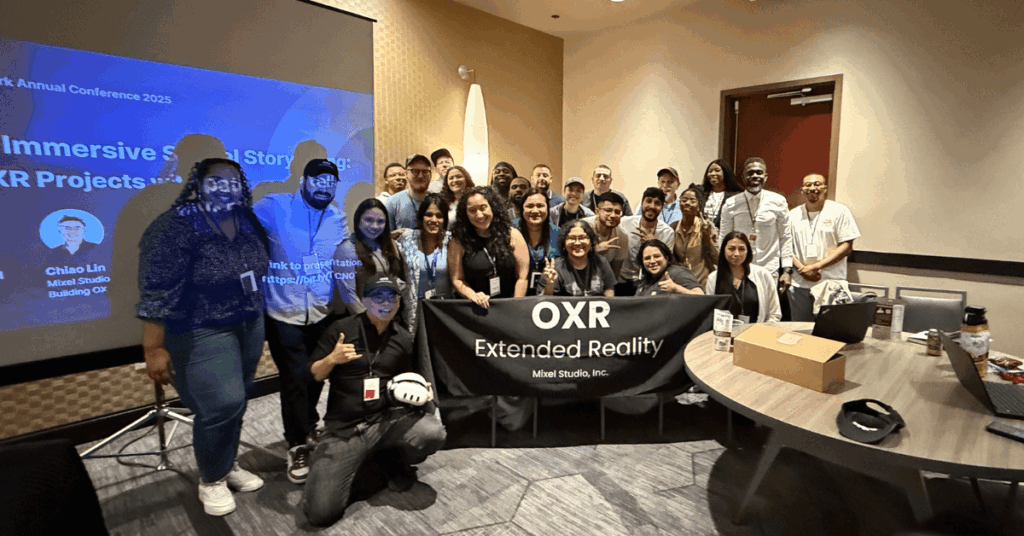
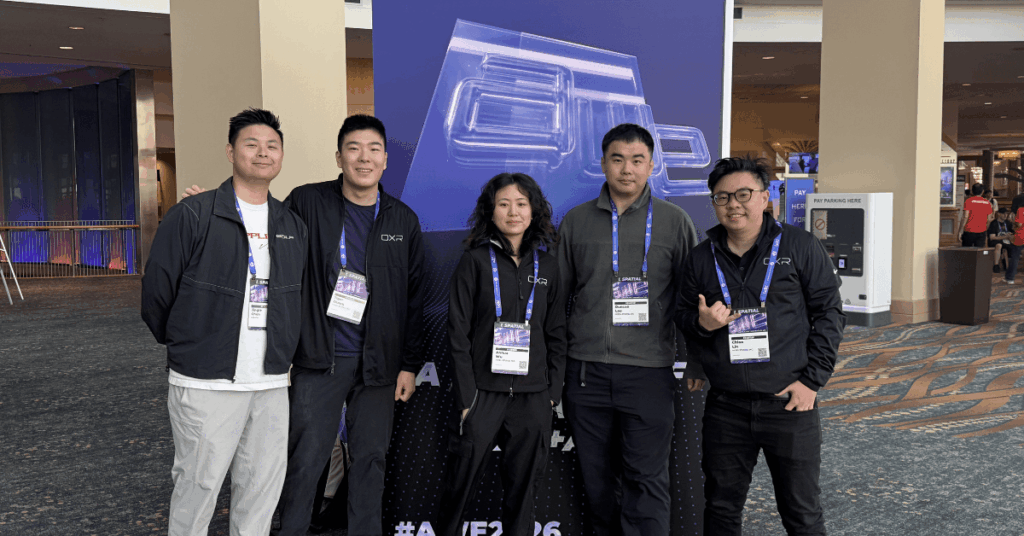
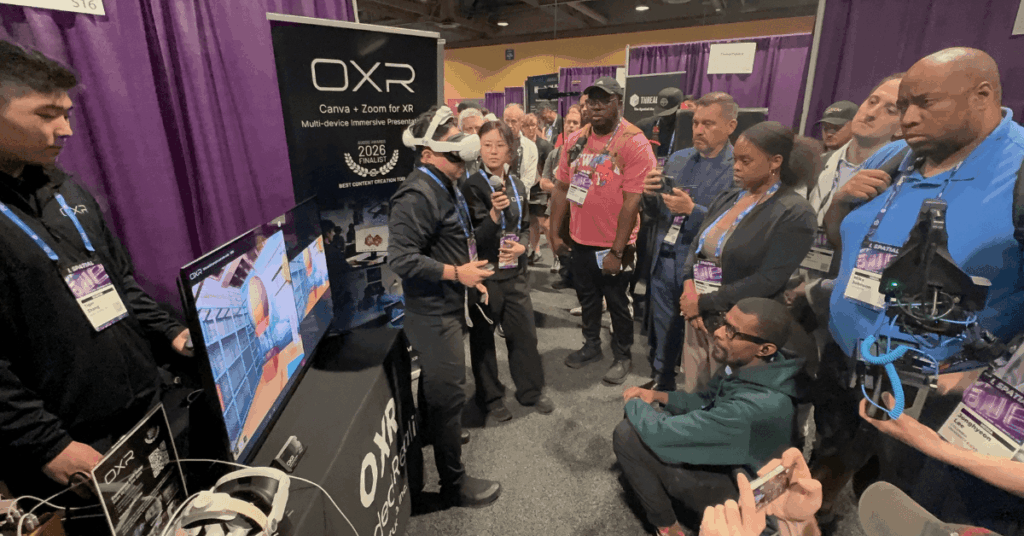
In early 2026, OXR was selected as a finalist for the AWE Auggie Awards in the Best Content Creation Tool category. Often regarded as the “Oscars of XR,” the Auggie Awards are among the industry’s most recognized honors. OXR was also selected to participate in the conference’s official media walkthrough.
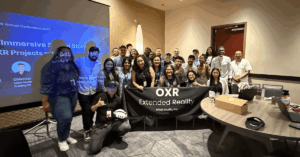
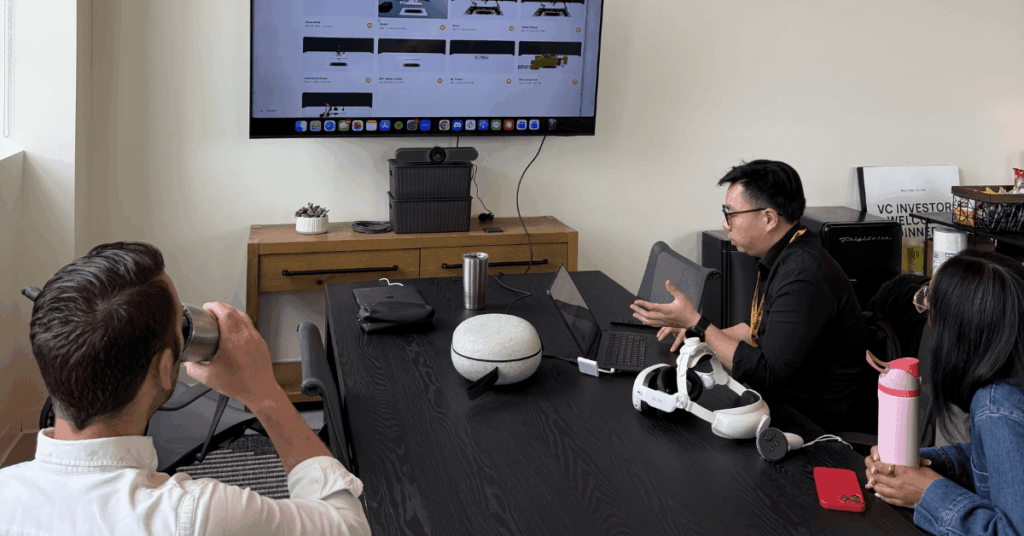
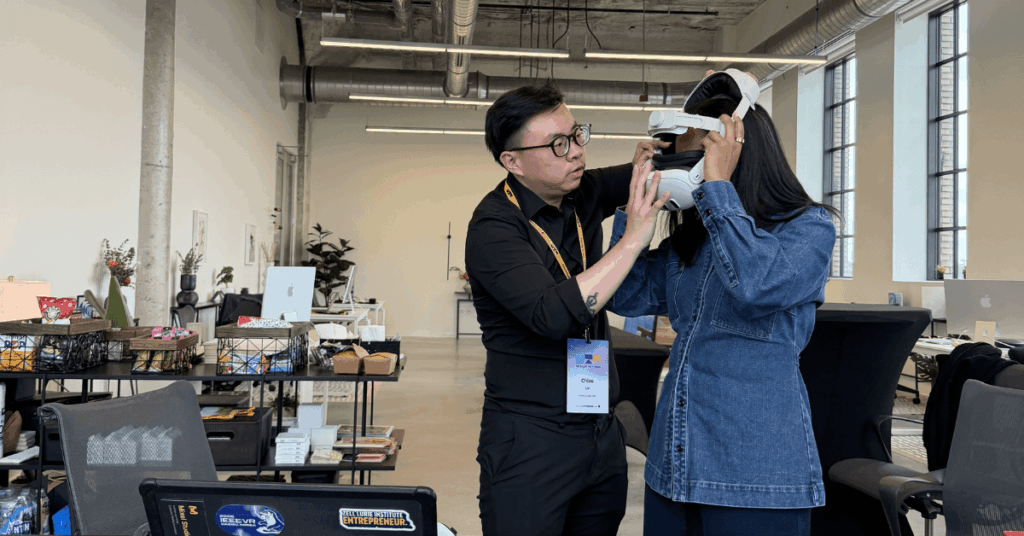
In the weeks leading up to AWE, my team and I pushed hard to complete our beta release and the XR Audience Join feature. When more than twenty members of the media arrived at our booth, we demonstrated how multiple audience members could join the same XR experience.
Across the group, we heard wave after wave of surprised reactions: “Woo!” The sound lasted only a moment, but it stayed with me. It reminded me that people had not lost interest in this technology.
The real problem was not a lack of interest, but that existing tools were not simple, practical, or well integrated into people’s established workflows. Users wanted not only the ability to adopt the technology, but also the control to shape how it fit into their own work.
Though we did not win the Auggie Award. When we submitted our application, many of the features that now define the product had not yet been completed. Still, becoming a finalist meant that OXR had left a permanent mark within the XR industry.
We were no longer only a student project being tested within a university. We were becoming a product recognized by the industry.
Soon afterward, more opportunities began to appear.
The digital director of a major museum approached me about a potential year-long contract. A K–12 virtual school in Michigan initially discussed a one-semester pilot with us, but later began developing a three-year, school-wide rollout plan.
To serve institutional customers, we started completing SAM registration, cybersecurity documentation, technical architecture materials, terms of use, and privacy policies. These tasks were not as visible as receiving an award onstage. But they were the real work of transforming a student project into a commercial company.
My First Venture Capital Investment
At the end of March 2026, after the Michigan Founders Fund Showcase, Union Heritage Ventures approached me. Over the next two months, we entered a formal due diligence process.
The investors reviewed more than the pitch deck. They examined the market, product, customers, team, finances, technology, and legal structure. The process forced me to answer basic questions again and again: What problem are we truly solving? Who is willing to pay for it? Why now? Why us?
In July, I received a formal investment decision: $120,000 USD. It was the first institutional venture capital investment of my life.
Of course, I was happy. But it did not feel like a moment of “we finally made it.” An investment is not the finish line. It is a larger responsibility.
It means someone believes the evidence we have accumulated so far may have the potential to become a real, scalable company.
I still need to find more customers, build a repeatable sales model, lead the team, and prove that OXR can become a sustainable and growing business.
But this time, I no longer feel completely alone.
Entrepreneurship Is Not a Solo Sprint
Looking back, I increasingly believe that entrepreneurship is not a heroic solo sprint. It is more like a relay race.
The University of Michigan gave me the technical and research foundation. Teachers, students, and early partners helped me understand the real problem.
Zell Entrepreneurs, Ann Arbor SPARK, Michigan Founders Fund, gener8tor, the Desai Accelerator, MSU Foudation, and members of Michigan’s entrepreneurial and investment community each handed me the baton at different stages.
Not every application succeeds. Not every pilot becomes a contract. Not every person who believes in you ultimately has the ability to invest.
But a strong ecosystem gives more people the opportunity to begin.
Even when a company pivots or fails, the communication, financial, management, sales, and technical skills the founder develops remain within the region. Those skills become part of the next company, the next team, and the next innovation.
An Incredible Year—Truly Incredible
I am still afraid sometimes. I still do not know whether every decision is correct, or how far OXR will ultimately go. But I am no longer waiting for the day when I suddenly feel “ready” before allowing myself to become a founder.
I am a founder.
I came from Taiwan to Ann Arbor. I spent almost all my savings on graduate school. I washed dishes to obtain a Social Security number. I went from memorizing every word of an English pitch to teaching on the IEEE VR stage.
I went from not knowing where the next customer would come from to working with vitual schools that is considering a three-year partnership to all of their ten schools.
I went from being afraid to raise capital to receiving my first venture capital investment.
When I put all of those moments together, the journey feels incredible.
But this is not an overnight success story. It is the story of an international student in an unfamiliar country, learning the rules while doubting himself, feeling afraid while continuing to move forward.
Even today, I am not sure whether I have become what other people imagine when they hear the words “successful founder.” I only know that when I wake up tomorrow morning, I will continue doing the next thing that needs to be done.
Perhaps that is what entrepreneurship really is. Not the absence of fear, but the decision to take one more step despite it.
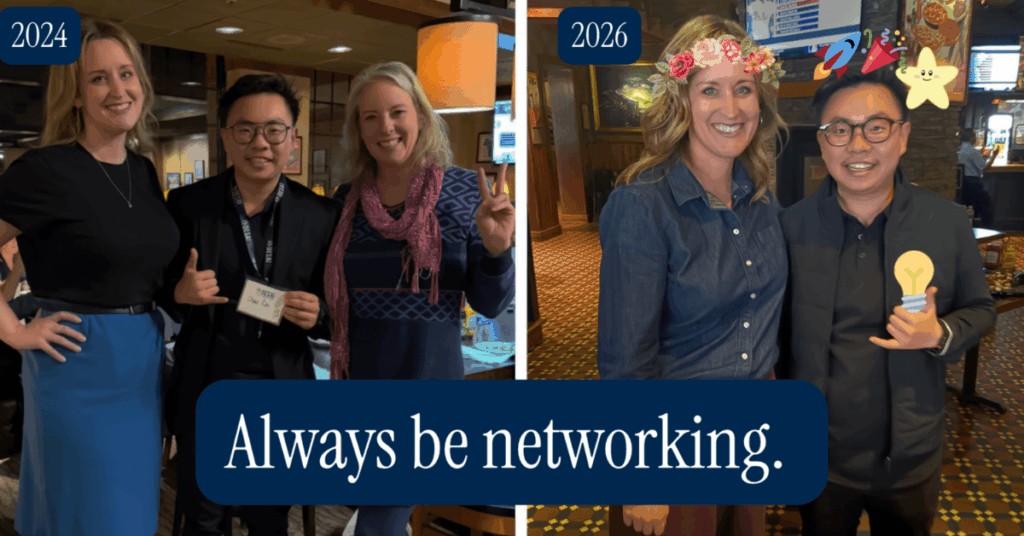
I want to give a special shout-out to my longtime mentor, Anne Maghas, for her continued support through our regular check-ins. She has been there since the very beginning, when I was still building CodeBloc (which, looking back, was a charmingly naive idea) and has guided, encouraged, and supported me throughout this journey for more than a year and a half. She is paticen with me, listen to my worries, and reallysit down taime time to work with me.
Sometimes, you simply need one person who is willing to be there and say, “It’s okay. Take your time,” or, “Give yourself a timeline and clear goals. And if it does not work out, it is okay to choose a different path.”
That kind of steady support can mean more than people realize.
To close this already far-too-long blog post, I want to say that I would not be the person I am today without the programs, mentors, and communities that gave me a chance.
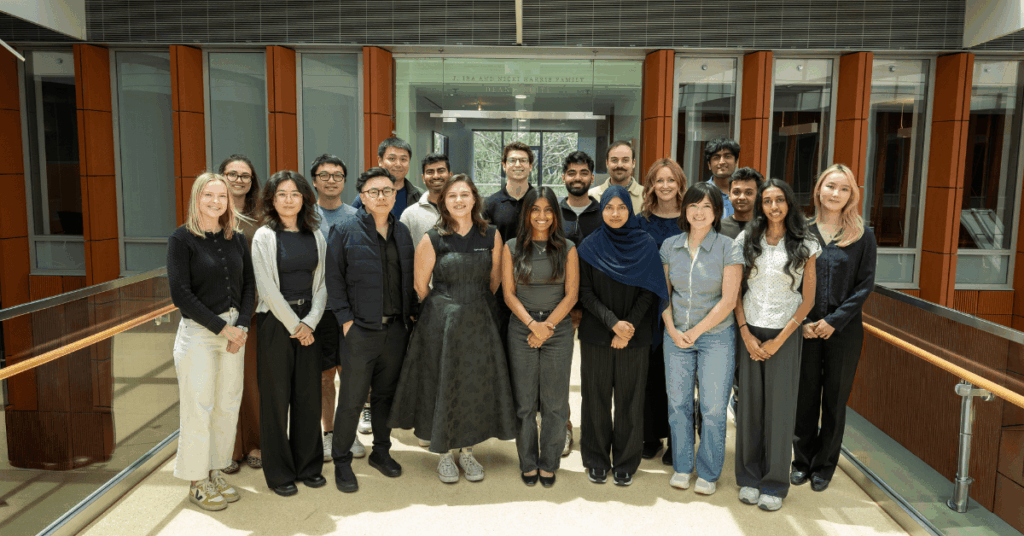
I also want to recognize everyone who believed in my vision and was willing to invest their time, talent, and energy in building it alongside me—Anhua Wu, Ting Lu, Tiger Zhang, Vivek Selvaraj, Khyler Lin, Vincent Chen, Iris Wang, Duncan Lau, Kian Odongo, Andy Yao, Swetha Konduru, Jinnan Chen, Evelyn Luan, and John Hawver—as well as our advisors, Dr. Michael Nebeling, Jeremy Nelson and Dr. Kamran Mirza, Jacqueline Rinehart and Gustavo Madrigal.
Whether you are still part of the team or have since moved on to pursue a different path, I am deeply grateful for your contributions and for the role you played in this incredible journey. You helped me become a better leader, trusted me when I was still learning how to lead, and continued working alongside me even when I may not have felt fully ready.
This company and this journey would not be the same without you.
I owe so much to Michigan—from my first scholarship to my first company and first VC check. People often say that it takes a village to raise a child. I believe it takes an entire ecosystem to build a founder.